

How do you know if the coconut is ripe?
When sourcing coconuts for your business, timing is everything. Ripeness affects not only the flavor and texture of the coconut but also its end use, whether that’s for beverages, baked goods, or large-scale processing.
In this guide, The Coconut Cooperative aims to help coconut buyers, manufacturers, and suppliers recognize coconut ripeness so they can select the right type for their specific needs.
Key signs of ripeness
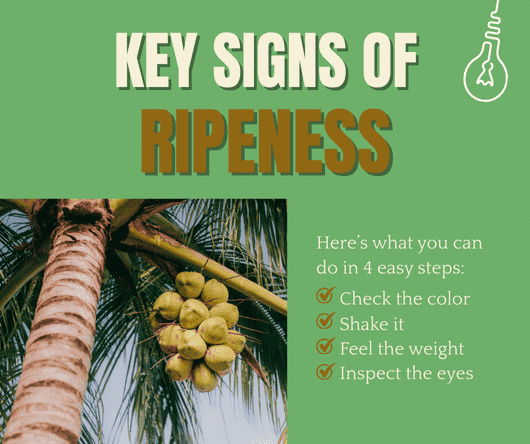
Identifying coconut ripeness doesn’t require complex tools, just a few simple checks that reveal a lot about its maturity and freshness.
Here’s what you can do in 4 easy steps:
- Check the color
- Young coconuts (green or light yellow) are rich in refreshing water and have soft, jelly-like flesh. These are ideal for beverages and fresh consumption.
- Mature coconuts (brown with a fibrous husk) contain firm white meat and less water, making them best for cooking, oil extraction, and processing into other coconut products.
- Shake it
- A simple shake test goes a long way.
- A ripe coconut will slosh with water inside.
- If little or no sound is heard, the fruit may be old or dried out.
- Feel the weight
- Heaviness is a good sign.
- A ripe, fresh coconut will feel solid for its size, thanks to the liquid content inside.
- Inspect the eyes
- Every coconut has three “eyes.”
- For business buyers, these spots are an important checkpoint:
- They should be dry, intact, and free from mold.
- Soft or leaking eyes may indicate spoilage.
Selecting the right coconut for your needs
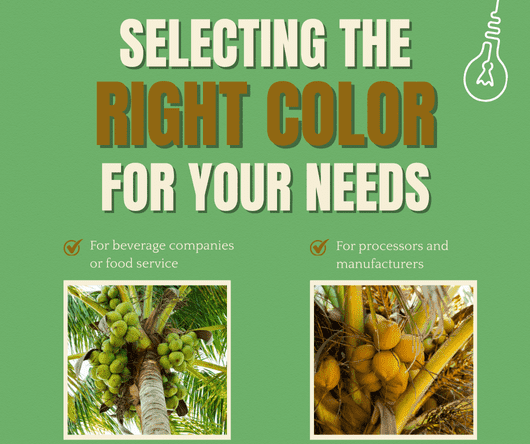
- For beverage companies or food service – Young coconuts are the go-to.
- For processors and manufacturers – Mature coconuts provide the rich, firm meat needed for desiccated coconut, oils, flours, and more.
Bulk buying tips
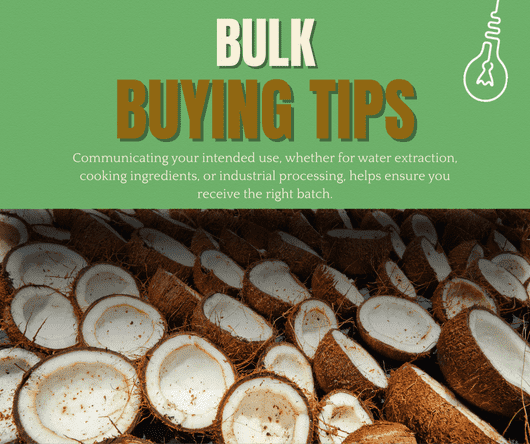
When buying coconuts in bulk, suppliers typically pre-sort by maturity stage. Communicating your intended use, whether for water extraction, cooking ingredients, or industrial processing, helps ensure you receive the right batch.
Mature and young coconuts are rarely mixed in commercial supply, but double-checking specifications with your supplier safeguards against inconsistencies in quality.
Conclusion: Coconut ripeness and reliability
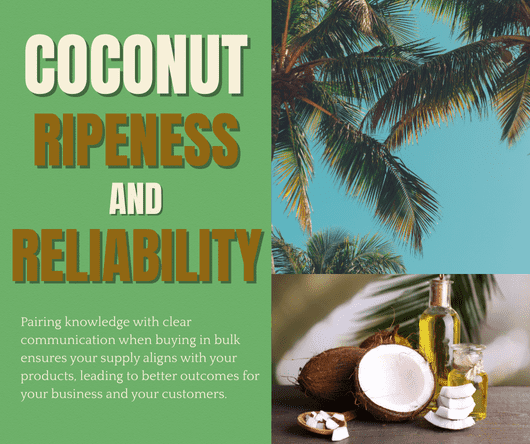
Knowing how to identify a ripe coconut is essential for businesses that rely on quality and consistency. By checking the color, weight, sound, and condition of the shell, you can confidently select coconuts that meet your production needs.
Pairing this knowledge with clear communication when buying in bulk ensures your supply aligns with your products, leading to better outcomes for your business and your customers.
The Coconut Coop: Our role in supplying the right coconuts
At The Coconut Coop, we know that ripeness directly affects quality and usability. That’s why we work with trusted suppliers who carefully sort coconuts by maturity stage, whether young for water and fresh use, or mature for processing into oils, flours, and other ingredients. This ensures our business customers always receive coconuts suited to their specific production needs.
References and resources

- The Guardian (2024) – Ready or not? The expert guide to buying fruit – so it is always ripe and delicious.
- Brooks Tropicals (2021) – 3 signs of a good coconut.
- Gardening Know How (2024) – When Are Coconuts Ripe: Do Coconuts Ripen After They Are Picked.


