
Where do coconuts come from?
 Coconuts are among the most recognizable fruits in the world, often synonymous with tropical beaches, refreshing drinks, and countless culinary and industrial uses. Yet, have you ever wondered where coconuts actually come from?
In this blog, The Coconut Cooperative explores the fascinating origins, natural spread, and modern production of coconuts to show how this remarkable fruit connects nature, history, and global trade.
The origin of the coconut tree
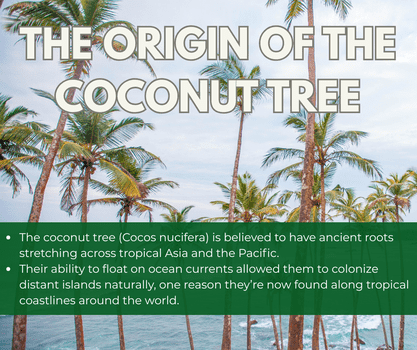
The coconut tree (Cocos nucifera) is believed to have ancient roots stretching across tropical Asia and the Pacific. While scientists have long debated its exact birthplace, research suggests that coconuts may have two main origins: one in South Asia (likely around the Indian Ocean) and another in Southeast Asia and the Pacific region.
Fossil records and genetic studies indicate that coconuts have been growing for millions of years, adapting perfectly to coastal environments. Their ability to float on ocean currents allowed them to colonize distant islands naturally, one reason they’re now found along tropical coastlines around the world.
How coconuts spread across the world
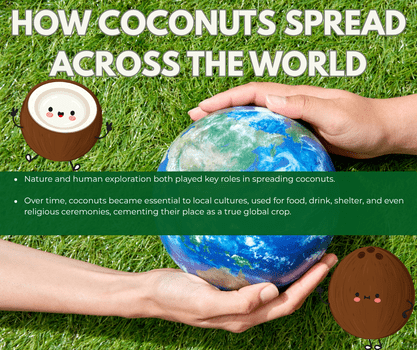
Nature and human exploration both played key roles in spreading coconuts. The fruit’s tough shell and buoyant husk allowed it to drift across seas and germinate wherever it landed on sandy shores. Early traders and voyagers then carried coconuts along trade routes, introducing them to new regions, from Africa to the Caribbean and the Americas.
Over time, coconuts became essential to local cultures. They’ve long been used for food, drink, shelter, and even religious ceremonies, cementing their place as a true global crop.
Top coconut-producing countries in modern history
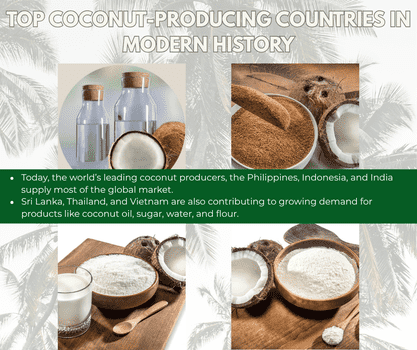
Today, the world’s leading coconut producers are the Philippines, Indonesia, and India, which together account for most of the global supply. These tropical nations benefit from the warm temperatures, consistent rainfall, and coastal ecosystems in which coconut palms thrive in.
Other key producers include Sri Lanka, Thailand, and Vietnam, which contribute to the growing demand for coconut-based products, such as:
The global coconut industry continues to expand as consumers and manufacturers alike embrace sustainable, plant-based ingredients.
From tree to trade: Global coconut supply chains
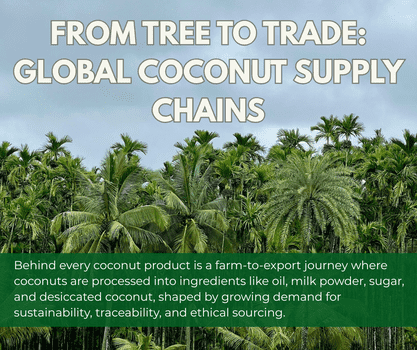
Behind every coconut product on store shelves lies a complex journey from farm to export. After harvesting, coconuts are processed into various ingredients such as virgin coconut oil, coconut milk powder, coconut sugar, and desiccated coconut.
Global buyers increasingly prioritize sustainability, traceability, and organic certification, qualities that ensure ethical sourcing while maintaining quality. This growing focus has shaped the modern coconut supply chain, where transparency and partnerships matter as much as product excellence.
Conclusion: A global fruit with local roots
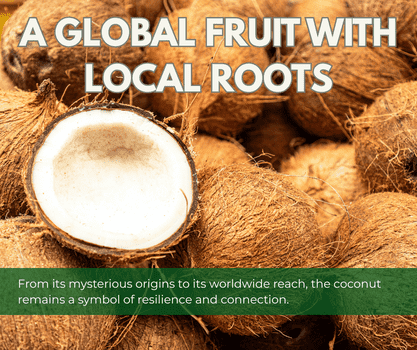
From its mysterious origins to its worldwide reach, the coconut remains a symbol of resilience and connection. It thrives where land meets sea and continues to sustain communities and industries alike.
Whether you’re a curious reader or a business sourcing in bulk, understanding where coconuts come from highlights their incredible journey, one that starts in the tropics and reaches every corner of the world.
The Coconut Cooperative: Your partner in sustainable coconut sourcing
At The Coconut Cooperative, we take pride in connecting businesses with high-quality, organic coconut ingredients sourced responsibly from trusted farms. From coconut sugar to toasted flakes, our range of products supports manufacturers, wholesalers, and culinary innovators seeking reliable, sustainably farmed coconut materials.
We’re more than just a supplier. We are your partner in building a responsible, traceable coconut supply chain.
References and resources

- Johnson, Dennis V. (1998) – Non- Wood Forest Products: Tropical Palms.
- Harries, Hugh C. (2012) – Germination rate is the significant characteristic determining coconut palm diversity.
- Gunn, Bee Fong (2016) – Phylogenomics of the coconut (Cocos nucifera L.).
- Beveridge, et al. (2022) – Fruit Biology of Coconut (Cocos nucifera L.).
- ScienceDirect (2024) – Coconut – an overview.


