
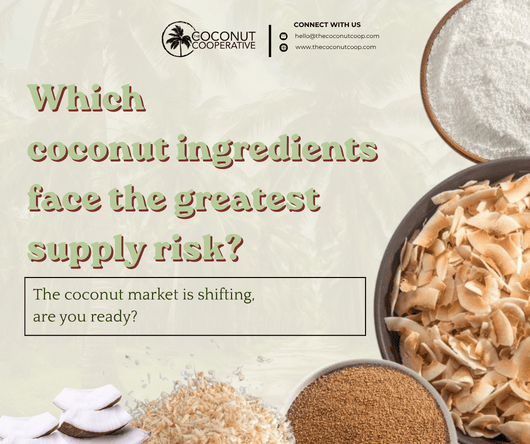
Which coconut ingredients face the greatest supply risk?
Businesses that rely on coconut ingredients have benefited from softer pricing throughout the first half of 2026. Improved supply chain conditions, normalized demand, and increased inventory availability have created favorable purchasing opportunities across much of the market.
However, not all coconut ingredient categories are following the same path. As manufacturers begin planning for late-summer production schedules and the fall buying season, some ingredients are showing early signs of tightening supply while others continue to offer attractive pricing opportunities.
Understanding which categories may face greater risk can help procurement teams make more informed purchasing decisions into the second half of the year.
Which coconut products face the highest supply risk before Q4?
The coconut market remains relatively stable today, but several factors could influence supply and pricing over the coming months.
Seasonal demand typically accelerates as food manufacturers, bakeries, beverage producers, and consumer packaged goods brands prepare for increased production during the fall and holiday seasons. At the same time, freight costs have begun to rise modestly, while geopolitical uncertainty and potential tariff developments continue to create risk across global supply chains.
Although current inventories remain healthy in many categories, buyers should recognize that availability conditions can change quickly once demand begins to build.
The key question is no longer whether pricing has improved — it has. The more important question is which ingredients may become harder to source in Q3 and Q4.
Organic coconut sugar supply tightens as seasonal demand approaches
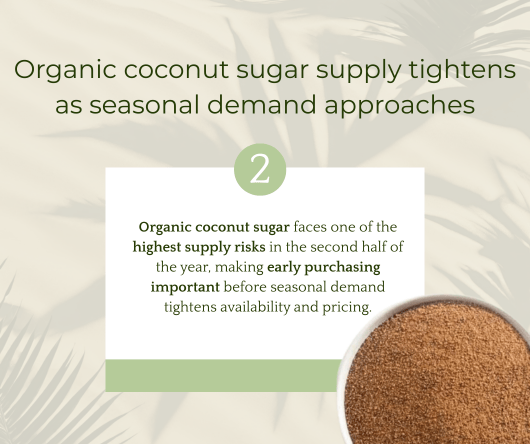
Among core coconut ingredients, organic coconut sugar currently presents one of the most significant supply concerns heading into the second half of the year.
Unlike some other coconut-derived ingredients, coconut sugar has historically experienced greater market volatility due to production limitations and fluctuations in supply availability. Early market signals suggest that tightening conditions may begin appearing as early as August.
As manufacturers increase purchasing activity for fall production schedules, available inventories could become more constrained, placing upward pressure on pricing and lead times.
For businesses that use organic coconut sugar as a regular ingredient, securing inventory before seasonal demand peaks may help reduce the risk of supply interruptions later in the year.
Why are buyers watching coconut sugar closely?
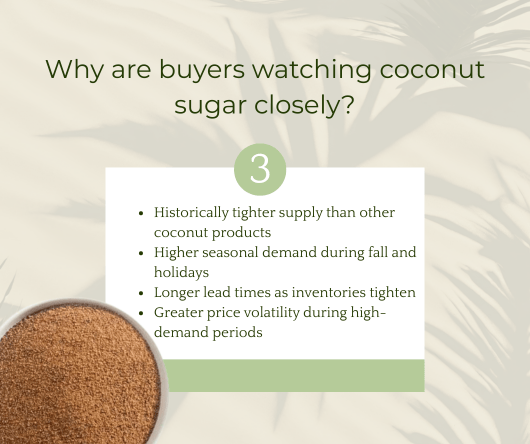
Several factors contribute to coconut sugar’s sensitivity within the broader coconut ingredient market:
- Historically tighter supply conditions compared to other coconut products
- Increased seasonal demand during fall and holiday production cycles
- Longer lead times when inventories tighten
- Greater price volatility during periods of elevated demand.
Organizations with consistent coconut sugar requirements may benefit from evaluating inventory coverage earlier than usual this year.
Coconut milk powder remains attractive, but supply concerns are emerging
Organic coconut milk powder continues to be one of the more attractively priced categories in the coconut portfolio.
Pricing has softened throughout 2026, creating opportunities for buyers seeking cost relief. However, concerns surrounding harvest performance in Vietnam remain an important market variable.
While current availability remains favorable, supply conditions can tighten quickly when weather-related or agricultural production concerns affect key growing regions.
Businesses that depend on coconut milk powder for beverage, bakery, confectionery, dairy alternative, or prepared food applications may want to evaluate purchasing requirements for the remainder of the year while pricing remains favorable.
Availability update: Coconut cream powder, coconut water powder, and coconut flour
Organic coconut cream powder and organic coconut water powder have also experienced moderate price declines this year.
These categories currently remain among the more stable segments of the coconut ingredient market. Nevertheless, broader market factors, including freight costs, seasonal demand, and global trade uncertainty, could eventually influence pricing as the year progresses.
For buyers looking to improve cost efficiency while maintaining supply security, current market conditions remain favorable.
Is it the best time to buy organic VCO?
The coconut oil category has experienced some of the most meaningful price relief during 2026.
Organic virgin coconut oil pricing has eased as importer inventories normalized and supply conditions improved. Availability across several packaging formats has strengthened, giving buyers greater flexibility than they experienced over the past year.
Current market conditions suggest that pricing is approaching a relatively favorable range for organizations planning larger-volume purchases or future inventory coverage.
What factors could influence coconut oil prices?
While coconut oil remains attractively priced today, buyers should continue monitoring:
- Freight rate increases from Southeast Asia
- Seasonal demand growth in Q3 and Q4
- Potential tariff developments affecting imported ingredients
- Energy market volatility affecting transportation costs.
These factors may contribute to firmer pricing later in the year even if supply conditions remain stable.
Desiccated coconut pricing continues to favor bulk buyers
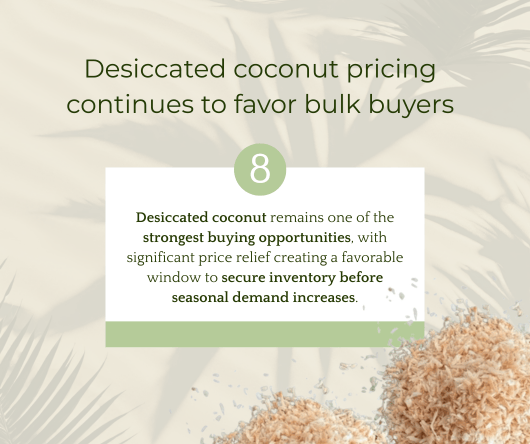
Desiccated coconut remains one of the most attractive categories from a purchasing perspective.
Organic medium and fine grades, along with chips, toasted flakes, and specialty formats, have experienced significant pricing relief since the beginning of the year.
A large portion of this decline has been driven by the continued clearing of higher-cost inventory throughout the market. As those inventories are gradually absorbed, buyers may see fewer opportunities to secure discounted material.
For businesses with predictable usage patterns, current pricing presents an opportunity to improve inventory positioning before seasonal demand begins increasing later this year.
How can procurement teams prioritize coconut ingredient purchases?
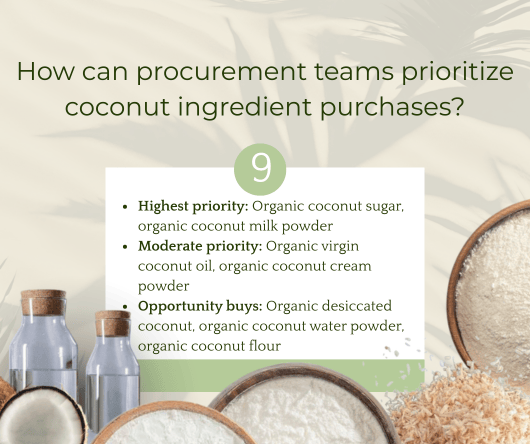
Every organization has different ingredient requirements, but current market conditions suggest a practical prioritization strategy:
Highest priority
- Organic coconut sugar
- Organic coconut milk powder (for high-volume users).
Moderate priority
- Organic virgin coconut oil
- Organic coconut cream powder.
Opportunity buys
- Organic desiccated coconut
- Organic coconut water powder
- Organic coconut flour.
This approach allows buyers to address categories facing potential supply pressure while taking advantage of favorable pricing where opportunities exist.
Preparing for Q4 coconut ingredient demand
The first half of 2026 has provided meaningful cost relief across many coconut ingredient categories. However, procurement decisions made during the summer months often determine how effectively businesses navigate the tighter conditions that can emerge later in the year.
While no one can predict market movements with certainty, current indicators point toward increasing risk as seasonal demand strengthens and external factors continue to influence global supply chains.
Organizations that review inventory requirements now, evaluate future production schedules, and secure coverage where appropriate may be better positioned to manage both cost and availability heading into Q4.
Final outlook: Where the greatest opportunities and risks exist
Not all coconut ingredients face the same level of risk into the second half of 2026.
Organic coconut sugar appears most vulnerable to tightening availability, while coconut milk powder warrants close attention due to ongoing supply concerns in key producing regions. Coconut oils and desiccated coconut products continue to offer attractive purchasing opportunities, although market conditions may become less favorable as seasonal demand builds.
For businesses that depend on coconut ingredients, now is an ideal time to evaluate sourcing strategies, inventory requirements, and future purchasing plans before market conditions potentially shift later in the year.
Contact The Coconut Cooperative to discuss current availability, volume opportunities, and sourcing solutions for your coconut ingredient requirements.
References and resources

- Food and Agriculture Organization of the United Nations (2025) – FAO Food Outlook points to broad-based increase in global food commodity production.
- UN Trade and Developement (2025) – Hormuz shipping disruptions raise risks for energy, fertilizers and vulnerable economies.
- Food and Agriculture Organization of the United Nations (2026) – Global Information and Early Warning System on Food and Agriculture.
- Reuters (2026) – World food prices slip in May, still near three-year high, FAO says.
- Reuters (2026) – Yemen’s Iran-backed Houthis threaten Israeli shipping in the Red Sea.


