
Discovering the health benefits of organic coconut flour
 In the pursuit of healthier dietary choices, organic coconut flour has emerged as a versatile and nutritious alternative to conventional wheat flour. Derived from the finely ground meat of coconuts, this natural byproduct of coconut oil production offers many health benefits.
In this article, The Coconut Cooperative covers the origins and advantages of organic coconut flour, exploring its fiber-rich composition and potential to support healthy blood sugar levels.
What is coconut flour?
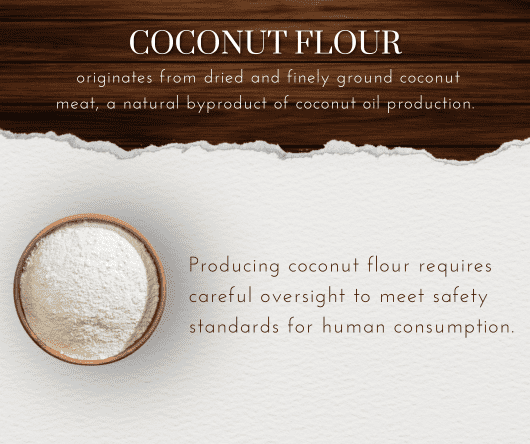
Coconut flour originates from dried and finely ground coconut meat, a natural byproduct of coconut oil production, as exemplified by The Coconut Cooperative’s organic coconut flour.
Our coconut flour derives from mature coconuts, obtained after the extraction of coconut oil. This process involves meticulous control to ensure safety standards for human consumption. Following extraction, the flour undergoes grinding to achieve its characteristic white appearance while retaining the delightful coconut aroma.
Though devoid of sugar, coconut flour maintains a subtle sweetness inherent to coconuts, rendering it a versatile ingredient for various baking recipes, ranging from bread and pancakes to cookies and muffins.
Why our coconut flour stands out
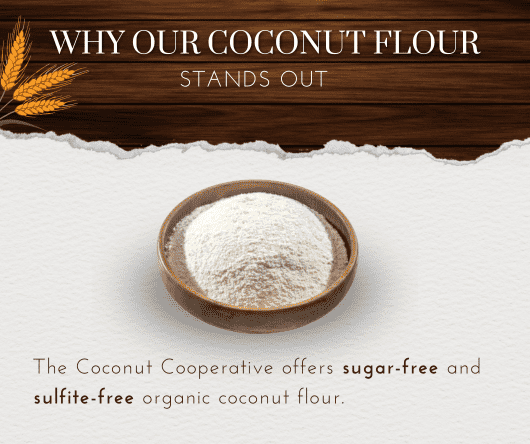
The organic coconut flour from The Coconut Cooperative is sugar-free and sulfite-free. It’s perfect for baking or thickening gravies and syrups. Its low glycemic index makes it an ideal choice for healthy baking, especially for those managing high blood sugar or following carb-conscious or paleo diets.
Furthermore, our manufacturing facility strictly segregates production equipment, preventing cross-contamination with other nut-containing products.
Promoting digestive health through fiber abundance

Compared to wheat flour, coconut flour boasts significantly higher fiber content, supporting healthy digestion and beneficial gut bacteria.
NB: These statements have not been evaluated by the Food and Drug Administration. These whole food products are not intended to diagnose, treat, cure, or prevent any disease.
Regulating blood sugar levels
Coconut flour, with its high fiber content, aids in moderating how quickly sugar is absorbed into the bloodstream. Its lower glycemic index relative to wheat flour also supports stable blood sugar levels.
NB: These statements have not been evaluated by the Food and Drug Administration. These whole food products are not intended to diagnose, treat, cure, or prevent any disease.
Conclusion: Embracing the nutritional bounty of organic coconut flour
Organic coconut flour stands as a testament to nature’s bounty, offering a wholesome alternative for those seeking fiber-rich dietary options. With its origins deeply rooted in the meticulous extraction process of coconut oil, every grain of coconut flour embodies purity and nutritional goodness.
The Coconut Cooperative‘s commitment to quality ensures a product that not only tantalizes the taste buds with its subtle sweetness but also nourishes the body with its abundance of health-promoting properties. Incorporating organic coconut flour into your culinary repertoire opens doors to a world of delicious and nutritious possibilities, enriching both your meals and your well-being.
Click here to learn more about our bulk organic coconut flour.
References and resources

- Healthline (2022) – Coconut Flour: Nutrition, Benefits, and More.
- Jones, A. (2020) – A Comprehensive Guide to Organic Coconut Flour.
- Smith, J. (2021) – Exploring the Health Benefits of Organic Coconut Flour.


