
Understanding the role of tariffs in pricing coconut products

As the global demand for coconut ingredients continues to rise, businesses are increasingly feeling the pressure from fluctuating prices and supply chain disruptions. Many businesses are left wondering what’s driving the surge, and tariffs are a major part of the story.
In this blog, The Coconut Cooperative explores how recent and proposed tariffs on coconut products, especially from Southeast Asia, are influencing pricing trends for essential ingredients like virgin coconut oil, coconut flour, desiccated coconut, and coconut sugar.
The impact of tariffs on coconut product pricing

In April 2025, US tariffs on coconut products range from 10% to 16.5%, with the potential for further increases in the future. These tariffs are placed on products like organic coconut oil, coconut flour, and coconut sugar, which are essential ingredients in industries ranging from food production to cosmetics. As a result, the cost of these products is rising, with some ingredients experiencing price hikes of 20–25% from early 2025 levels.
The situation is exacerbated by rising global demand, which puts additional strain on coconut-producing countries. Tariffs add an extra layer of complexity, as businesses must navigate both the rising costs of raw materials and the longer lead times caused by shipping delays and container shortages.
Factors contributing to tariff increases
Several factors contribute to the tariffs on coconut products, such as:
- Trade policy shifts
- Geopolitical changes and trade policies between major coconut suppliers and importing countries, such as the US, have led to tariff impositions.
- For instance, tariffs on Vietnamese coconut products could reach as high as 46% in the future, impacting prices across the coconut ingredient market.
- Supply chain disruptions
- The coconut industry is heavily reliant on Southeast Asia, where production is subject to weather conditions and supply chain bottlenecks.
- As raw material shortages continue, tariffs only compound the challenges faced by businesses sourcing coconut ingredients.
- Environmental factors
- Climate events, such as El Niño, are also contributing to supply shortages, which in turn drive up prices.
- Countries, such as the Philippines, which account for a significant portion of global coconut exports, are experiencing lower-than-expected harvests. Thus, further escalating the price of coconut-derived products.
How tariffs affect businesses
The rising tariffs have broad implications for businesses sourcing coconut products. Here’s how they impact the industry:
- Increased cost of goods sold (COGS) – As tariffs are applied, the cost of importing coconut products increases, leading to higher production costs for businesses. Companies may have to pass these increased costs on to their customers, which could impact competitiveness and profitability.
- Extended lead times – Tariffs often lead to longer shipping times as importers adjust to new trade regulations and customs procedures. These delays can create inventory shortages, leaving businesses without enough supply to meet customer demand.
- Uncertainty and volatility – The unpredictability of tariff rates and the possibility of future increases create a volatile pricing environment. This uncertainty can make it challenging for businesses to plan for the future and maintain stable pricing for their customers.
Strategies for navigating rising coconut ingredient costs
While the impact of tariffs on coconut ingredient pricing cannot be avoided, there are several strategies businesses can implement to mitigate the financial strain and maintain a steady supply chain.
Early contracting and forward ordering

Businesses can protect themselves against price increases by securing contracts with suppliers in advance. By locking in prices for the next 3–6 months, companies can better manage costs and avoid sudden price hikes due to new tariffs or supply shortages.
Diversifying sources
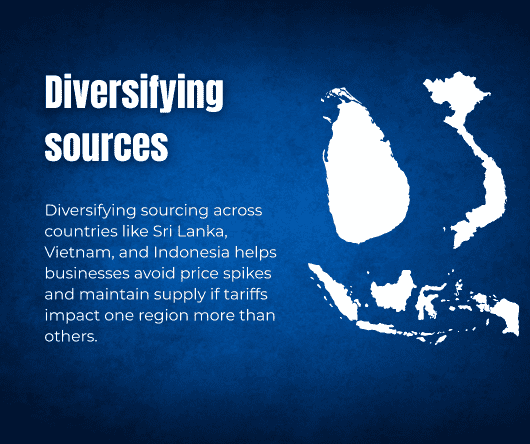
Relying on a single supplier or origin for coconut ingredients can expose businesses to price fluctuations. Exploring alternative sources from countries like Sri Lanka, Vietnam, and Indonesia can help businesses maintain access to coconut products at more competitive prices, especially if tariffs affect one region more than another.
Bulk purchasing and stockpiling

If supply chains become constrained or if tariff increases are imminent, businesses can mitigate the risk by purchasing in bulk and stockpiling essential coconut ingredients. Accordingly, this strategy allows companies to hedge against future price hikes and ensures they have the raw materials they need for uninterrupted production.
Negotiating with suppliers
Businesses should engage in open conversations with suppliers to negotiate pricing, especially when tariffs are a significant factor in price increases. Long-term relationships with suppliers can help secure better terms and potentially reduce costs despite the rising tariffs.
Implementing price lock-in agreements

Some suppliers, including The Coconut Cooperative, offer price lock-in agreements for customers, allowing businesses to secure coconut ingredient prices for extended periods (e.g., 3–6 months or even longer).
Additionally, these agreements can provide much-needed stability in an otherwise uncertain market.
Evaluating product formulations
Companies that rely heavily on coconut ingredients for their products may want to assess their formulations to see if alternative ingredients can be used in place of coconut derivatives. This could involve exploring plant-based substitutes or blending coconut products with other materials to reduce overall costs.
Conclusion: Stay ahead in a shifting coconut market
Tariffs on coconut ingredients are a growing concern for businesses in industries that rely on these products. As the market continues to face pricing pressures, companies need to take proactive measures to manage costs and minimize the impact of rising tariffs.
Early planning, diversified sourcing, and long-term supplier relationships can help businesses navigate the challenges of the coconut ingredient market, ensuring that they remain competitive and prepared for future changes in the global trade landscape.
References and resources

- American Booksellers Association (2025) – An Overview of the 2025 Tariffs.
- King Freight Logistics Vietnam (2025) – U.S. Imposes 46% Tariff on Vietnamese Goods.
- Research and Markets (2025) – Virgin Coconut Oil Strategic Business Report and Tariff Impact Analysis 2025.
- TM Duché & Sons Ltd (2025) – Philippines Coconut Market Update End April 2025.


