
The 2025 coconut market forecast: Trends, challenges, and opportunities
 The global coconut ingredient market has shown remarkable resilience as we transition from 2024 into 2025. Despite facing supply chain disruptions, raw material shortages, and fluctuating production, the demand for coconut products continues to surge.
In this blog, The Coconut Cooperative takes a closer look at the key trends shaping the coconut market and how businesses can strategically navigate this dynamic landscape.
Regulatory changes: A win for the coconut industry
 In January 2025, the Food and Drug Administration (FDA) removed coconut from the list of major food allergens, a significant milestone for the industry. This decision reduces labeling and trade restrictions, simplifying compliance for manufacturers and expanding coconut’s potential in various products.
Industry groups, such as the Coconut Coalition of the Americas (CCA), have been pivotal in advocating for this change.
Coconut market trends and export performance
 Coconut products remain in high demand, driven by the growing preference for plant-based ingredients across Europe, China, and the USA. This demand surge is further fueled by coconut’s versatility in food, beverage, and cosmetic applications. However, meeting this demand has been challenging due to raw material shortages and production bottlenecks.
Rising demand meets supply constraints
 Despite global supply chain disruptions, coconut exports experienced notable growth in early 2024. However, the latter half faced setbacks due to unpredictable weather patterns, particularly in the Philippines. Thus, leading to supply chain ripple effects worldwide.
As we enter Q3 2025, prices remain elevated. This is driven by strong buyer interest and persistent supply concerns.
Weather-related supply challenges
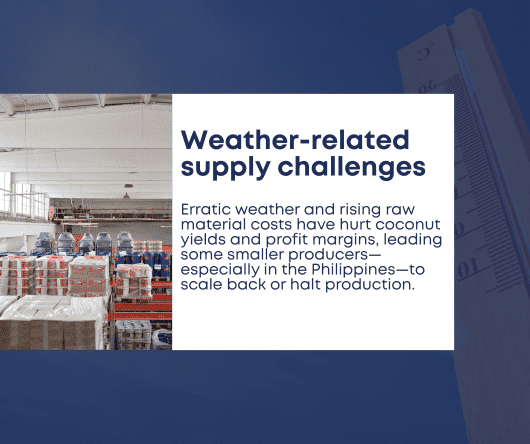
Erratic weather conditions, including El Niño and La Niña events, have significantly impacted coconut yields. The Philippines, a major coconut producer, has faced production challenges due to these climate fluctuations.
Additionally, rising raw material costs have strained profit margins, with some smaller producers scaling back or pausing production entirely.
Shipping and logistics hurdles
 Freight costs remain high, with some stabilization anticipated in 2025. Southeast Asian exporters, particularly in Vietnam, continue to face logistical bottlenecks, affecting shipment timelines to key markets, including Northern Europe and North America.
Furthermore, the recent festivities are also contributing to current shipping delays.
2025 coconut market outlook: Preparing for continued volatility

- Supply constraints are expected to persist, with prices likely to remain firm or increase in Q3.
- Buyers are securing coconut supplies earlier to mitigate risks associated with price volatility, focusing on high-demand products such as virgin coconut oil and desiccated coconut.
- Alternate Southeast Asian suppliers are gaining traction as the Philippines grapples with ongoing climate-related challenges.
Conclusion: Action plan for coconut buyers
 With raw material constraints and elevated production costs, businesses should consider securing their coconut ingredient requirements for the next six months to avoid price hikes and supply disruptions.
The Coconut Cooperative is committed to working with trusted suppliers to ensure the consistent availability of premium organic coconut ingredients.
Partner with The Coconut Cooperative

Let us help you navigate the coconut market with confidence and reliability.
At The Coconut Cooperative, we understand the complexities of the current market. Contact us today to discuss your sourcing needs and secure your supply at current market rates.
References and resources

- Coconut Coalition of the Americas (2025) – Coconut Coalition of the Americas.
- Food and Drug Administration (2025) – FDA Releases Allergen, Food Safety, and Plant-Based Alternative Labeling Guidances.
- Warren, C. et al. (2024) – Prevalence and burden of coconut allergy in the United States.


