
How do you know when coconut oil goes bad?

Coconut oil has earned its place in kitchens, cosmetic routines, and beyond, thanks to its versatility and impressive longevity. But, as with any natural product, many people wonder: Can coconut oil actually go bad?
In this guide, The Coconut Cooperative will walk you through everything you need to know to store your coconut oil properly, recognize the signs of spoilage, and make the most of every jar.
How long does coconut oil last?
While coconut oil is known for its stability, there are factors that can influence its shelf life and quality over time. The shelf life of coconut oil largely depends on whether it’s refined or virgin.
Virgin coconut oil, derived through a cold-press process, often retains more natural properties, while refined coconut oil undergoes additional processing, giving it a cleaner aroma and higher heat resistance.
Generally, virgin coconut oil can last between two to three years when stored properly, while refined coconut oil may last a bit longer due to its processing.
How to store coconut oil properly
Storing coconut oil in a cool, dark place is ideal. A pantry or cupboard away from direct sunlight is perfect, as exposure to heat and light can affect its quality over time.
Both types of coconut oil solidify in cooler temperatures and melt in warmer ones, a natural trait that does not impact freshness.
It is also vital to use clean utensils each time you scoop out the oil to help prevent contaminants from entering the jar and preserve its longevity further. Furthermore, glass containers with airtight lids are recommended for storage, as they are less prone to absorbing odors or contaminants.
Signs that coconut oil may have spoiled
While coconut oil can last a long time, it is still essential to know when it may no longer be at its best.
Check for the following signs:
- Smell – Fresh coconut oil has a light, natural scent. Hence, a strong or rancid odor indicates it may have gone bad.
- Appearance – Look for any discoloration or changes in texture. Coconut oil should generally be clear or white when melted or solidified. Yellowing or visible spots may suggest spoilage.
- Taste – If the oil tastes off, this could be a sign of oxidation. This can happen over time, even with proper storage.
Can you still use expired coconut oil?

Coconut oil past its prime may still have non-culinary uses. It can be repurposed for general household applications where quality is less important, such as furniture polish or as a lubricant for squeaky doors. However, for cooking and other personal care uses, it’s best to stick to fresh oil to ensure optimal quality.
Conclusion: Keep your coconut oil fresh and ready to use
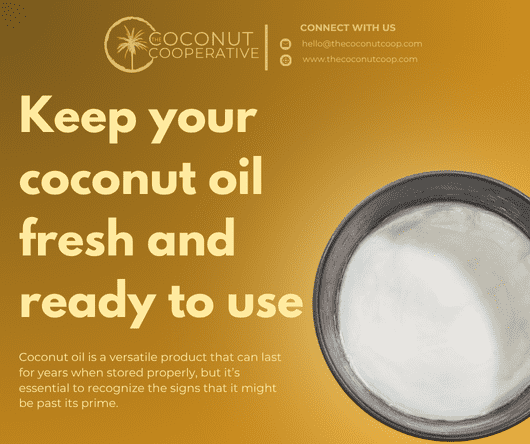
Coconut oil is a versatile product that can last for years when stored properly, but it’s essential to recognize the signs that it might be past its prime. By keeping it in a cool, dark place and using clean utensils, you can help preserve its freshness and quality.
Whether you are using it in the kitchen or for other applications, these tips will ensure you get the most out of every jar. So, next time you reach for your coconut oil, you’ll know it’s as fresh and effective as intended.
Click here to purchase our organic virgin coconut oil in bulk. For orders of 1 pallet or more, please contact us for volume pricing.
References and resources

- Diana Gariglio-Clelland (2023) – The Best Way to Store Coconut Oil.
- Dr Julie Bhosale (2023) – Storing Coconut Oil In Summer.
Related blogs

- The Coconut Cooperative (2024) – Clearing the air on coconut oil myths.
- The Coconut Cooperative (2024) – Understanding the opportunities and strategies for the coconut oil market.
- The Coconut Cooperative (2024) – Unlocking the potential of coconut oil: A sustainable alternative to palm oil.


