
Can coconut become the future of sustainable design?
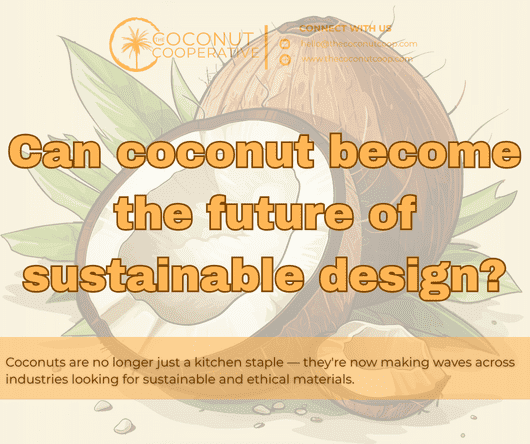
When most people think of coconuts, they picture tropical drinks, desserts, or cooking oils. However, in recent years, coconuts have quietly been making their way out of the kitchen and into industries as diverse as homeware, beauty, textiles, and packaging.
As businesses seek sustainable, versatile, and ethical materials, the humble coconut, once discarded after its edible parts are harvested, is clearly emerging as a star player in design and innovation.
So, can coconut become the future of sustainable design? Let’s take a closer look.
Coconut in beauty and personal care
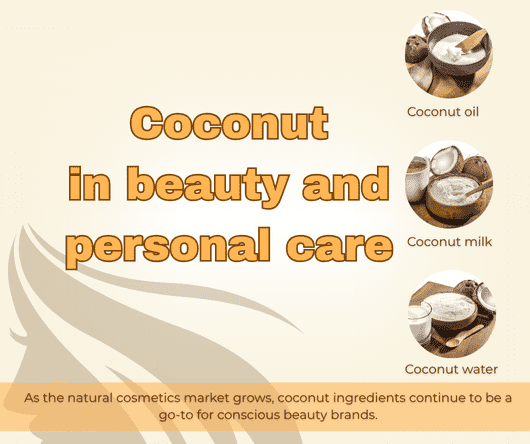
- Coconut oil has long been revered as a skin and hair care staple. Today, it’s a key ingredient in clean beauty formulations (from moisturizers to lip balms, hair masks to body scrubs).
- Virgin coconut oil, in particular, is favored for its purity and naturally derived composition, making it an appealing choice for brands embracing minimal ingredient lists and sustainable sourcing.
- Even coconut water and coconut milk extracts are finding their way into hydrating facial mists and body washes, favored for their tropical scent and plant-based origin.
- As the natural cosmetics market grows, coconut ingredients continue to be a go-to for conscious beauty brands.
Coconut in home and lifestyle products

The coconut shell, once considered waste, has found a new purpose in eco-conscious homeware. Designers now transform shells into rustic bowls, candle holders, and utensils, with each piece showcasing natural texture and warmth. Lightweight yet sturdy, coconut shell products offer a unique alternative to plastics and ceramics.
Meanwhile, coconut husk fibers, known as coir, are commonly used in doormats, brushes, and rope. These durable fibers are biodegradable and abundant, making them an ideal material for low-impact product lines.
Coconut in industrial innovation
Beyond home goods, coconut derivatives are gaining traction in industrial applications. Coconut shell activated carbon is widely used in air and water filtration systems, offering a plant-based solution for purification processes. It’s an especially attractive option for manufacturers seeking to lower their environmental footprint.
Coconut waste can also be processed into bio-based packaging or biodegradable plastic alternatives. With regulatory pressure mounting against single-use plastics, this innovation opens doors for packaging producers, logistics firms, and sustainable startups alike.
In agriculture, coconut peat (or coir pith) is used as a natural growing medium, especially useful for hydroponics and soil improvement.
Coconut in fashion and textiles
Yes, even fashion has discovered coconut. Blended with organic materials, coir can be woven into footwear soles, handbag bases, and decorative accessories. Some sustainable textile innovators are experimenting with coconut fibers in fabrics and eco-fiber blends, tapping into the global demand for earth-friendly fashion.
With creative collaboration, fashion brands and coconut suppliers can co-develop unique, low-waste materials that tell a compelling story from tree to trend.
Why coconut? Market drivers you shouldn’t ignore
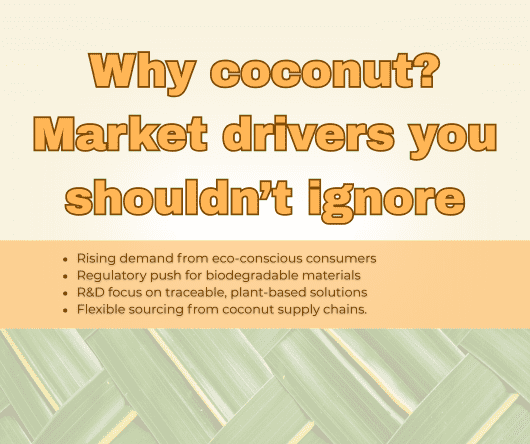
So, why is coconut trending across so many sectors?
- Eco-conscious consumers are driving demand for natural, renewable materials.
- Regulators are encouraging biodegradable inputs in packaging and product development.
- R&D teams are on the hunt for traceable, plant-based solutions that perform well and look great.
- Most importantly, coconut supply chains are increasingly ready to support non-food innovations with flexible sourcing options.
Where to start if you’re a business innovator
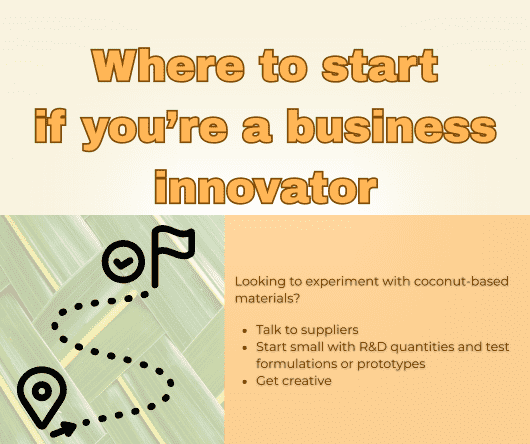
Looking to experiment with coconut-based materials?
You don’t have to be in the food industry to benefit from the coconut’s potential. Whether you’re designing packaging, personal care products, or eco-homeware, there’s probably a part of the coconut that fits your needs.
- Talk to suppliers that offer multiple formats, such as coconut oils, milk and water powders, shells, and husks.
- Start small with R&D quantities and test formulations or prototypes.
- Get creative – Ask yourself: “Can a coconut-based material replace something synthetic in your product?“
Conclusion: Is the future of sustainable design hiding in a coconut?

The coconut has already proven its worth in food. Now, it is inspiring a new era of sustainable, design-driven innovation, if we let it.
At The Coconut Cooperative, we’re ready to support businesses like yours with high-quality coconut products and ingredients for both food and non-food applications.
If you’re exploring sustainable materials for your next project, let’s talk coconuts.
References and resources

- LIVEKINDLY (2025) – World’s First Sweater Made From Coconut Fiber Waste Launches in Australia.
- Jacobi Group (2023) – The Coconut – A Sustainable Choice for the Future.
- The Guardian (2015) – Forget about cotton, we could be making textiles from banana and pineapple | Guardian sustainable business.


