
How soaring coconut prices are impacting Kerala’s cuisine and culture
Kerala, known as the “land of coconuts,” is facing an unexpected cultural and culinary challenge. The price of coconuts has more than tripled in recent months, disrupting households, restaurants, and even Kerala’s rich food identity.
From coconut oil used in everyday cooking to grated coconut in cherished traditional dishes, the ingredient that once unified meals has now become a luxury for many.
See, this coconut crisis is more than a supply issue; it’s a cultural reckoning for one of India’s most iconic culinary states, where food traditions are deeply tied to community, ritual, and heritage.
In this blog, The Coconut Cooperative explores the causes of the current shortage, its economic and cultural implications, and what this means for the future of Kerala’s coconut-based cuisine, local livelihoods, and the broader coconut supply chain in India and beyond.
Coconut: The heart of Kerala’s kitchen
Coconut is not just a cooking ingredient in Kerala; it’s an integral part of their daily lives. From curries and chutneys to desserts and oils, nearly every dish incorporates coconut in some form.
Did you know? Kerala alone consumes over 300,000 tonnes of India’s total 550,000-tonne coconut oil output annually, despite making up just 3% of the national population. That number indicates how deeply rooted the coconut is in their local diet.
What is causing the surge in coconut prices?
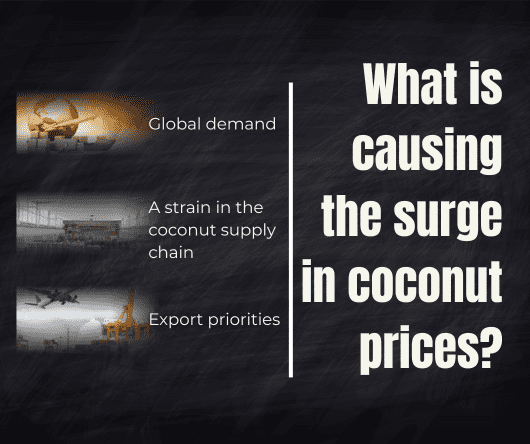
Several overlapping factors have led to this price spike, including:
- Global demand – International interest in coconut oil, coconut sugar, and coconut-based wellness products has led to increased exports from India, yet reduced local availability.
- A strain in the coconut supply chain – Harvest delays, climate impacts, and limited labor have not just disrupted production but pushed prices up, too.
- Export priorities – With higher margins overseas, suppliers are focusing on global buyers. Hence, leaving local markets short.
Impact on households and restaurants

The crisis has made preparing traditional meals difficult for families and restaurant owners alike. Coconut oil, which once cost ₹90 per kg, now exceeds ₹160. Chefs are being forced to adapt recipes or increase prices, decisions that compromise authenticity or alienate loyal customers.
According to the Kerala Hotel and Restaurant Association, many restaurants are struggling to offer staple dishes like avial or Kerala fish curry. Some are even removing coconut-heavy recipes from their menus altogether.
Economic ripple effects
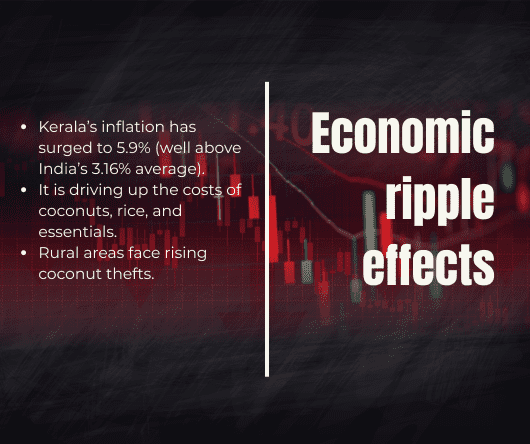
Kerala’s inflation rate has hit 5.9%, among the highest in India, compared to the national average of 3.16%. Along with coconuts, the prices of rice, vegetables, and cooking essentials have also risen.
In rural areas, coconut theft has become a growing concern due to the nut’s skyrocketing value.
Calls for government action
Local leaders and consumer groups are urging the government to step in, either by imposing price caps, supporting farmers, or improving domestic supply. Suggested actions include:
- Better support for small coconut growers
- Regulated exports to prioritize local demand
- Research into high-yield coconut varieties.
What is the cultural cost of a coconut shortage?
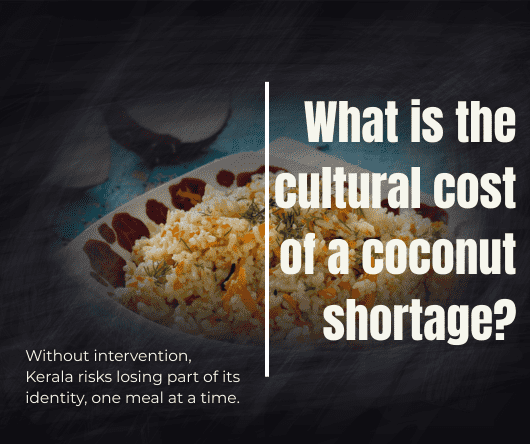
This crisis is more than economic. It’s reshaping the daily rituals, celebrations, and shared meals that define life in Kerala. From Onam feasts to temple offerings, the coconut’s absence is being felt deeply.
Without intervention, Kerala risks losing part of its identity, one meal at a time.
Conclusion: A time for local solutions
Kerala’s coconut crisis is a wake-up call. It’s a reminder of how global demand can affect local traditions, and how essential it is to balance export goals with domestic needs.
Whether you’re in the coconut trade, the hospitality sector, or simply a lover of South Indian cuisine, the time to act is now.
References and resources

- Kerala Hotel and Restaurant Association (2025) – Together we achieve more: KHRA.
- The Economic Times (2025) – Kerala’s culinary identity in crisis as major coconut crunch throws cooking out of gear.
- The Times of India (2025) – Ramesh Chennithala urges Kerala govt to curb rising costs.
Related blogs

- The Coconut Cooperative (2024) – How to choose the best coconut supplier for your business.
- The Coconut Cooperative (2024) – Partnering with The Coconut Cooperative.
- The Coconut Cooperative (2025) – Kerala farmer revolutionizes beverages with tender coconut wine.


