
How to build a profitable coconut-based product line
Coconut-based products have become a staple across many industries, including food, beverages, and cosmetics. As businesses continue to look for versatile, natural ingredients, coconut products offer a unique opportunity to expand product lines and meet consumer demands.
Incorporating coconut-based ingredients, such as coconut flour, coconut sugar, and coconut milk powder, can streamline production, reduce costs, and open doors to new markets.
In this guide, The Coconut Cooperative explores how to successfully build a profitable coconut-based product line focusing on bulk purchasing.
Understanding the versatility of coconut-based ingredients

Coconut is an adaptable ingredient that can be used across several industries. Here’s how key coconut ingredients can benefit your product line:
- Coconut flour – A popular plant-based option, coconut flour is an excellent ingredient for businesses producing bakery items or snacks. It is also a versatile ingredient for various food products, from muffins to protein bars.
- Coconut sugar – With its unique flavor, coconut sugar is often used as an alternative sweetener in a range of food products. Also, it is a preferred choice for products seeking a natural and unrefined sugar option.
- Coconut oil – Coconut oil is commonly used in both food products and cosmetics.
- Coconut milk powder – Coconut milk powder is ideal for businesses looking to incorporate dairy alternatives into their offerings, from beverages to ready-to-use cooking ingredients.
- Coconut water powder – A convenient alternative to liquid coconut water, coconut water powder is popular in beverage manufacturing, including hydration-focused products. It is also an efficient ingredient for creating shelf-stable beverages.
Identifying your target market
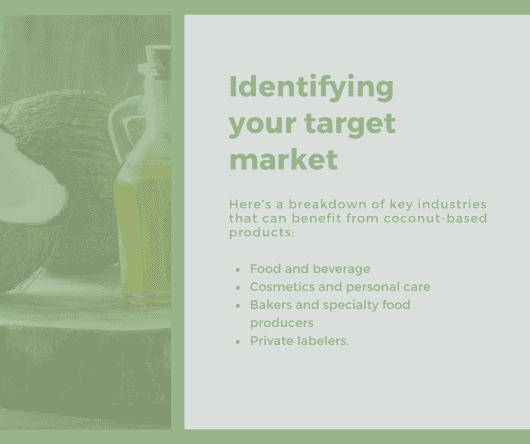
To build a successful coconut-based product line, it is essential to understand the right target market for each ingredient.
Here’s a breakdown of key industries that can benefit from coconut-based products:
- Food and beverage – Coconut ingredients, such as coconut flour and coconut sugar, are widely used in creating snacks, beverages, and baking mixes. These ingredients align well with growing consumer demand for plant-based and allergen-friendly options.
- Cosmetics and personal care – Coconut oil and coconut milk powder are frequently used in personal care products, such as moisturizers, soaps, and shampoos. These ingredients are particularly popular in the natural and organic beauty market.
- Bakers and specialty food producers – Businesses catering to vegan and plant-based diets can incorporate coconut-based ingredients into their recipes for a competitive edge in these growing markets.
- Private labelers – Companies that create products under their own brand labels can use coconut-based ingredients to develop a range of products, from snacks and beverages to cosmetics and wellness goods.
Sourcing coconut products in bulk

For businesses looking to optimize production and reduce costs, purchasing coconut products in bulk offers several benefits, including:
- Cost efficiency – Buying in bulk allows businesses to lower per-unit costs, making it easier to remain competitive while maintaining product quality.
- Supply chain stability – Bulk purchasing helps ensure a reliable, consistent supply of coconut ingredients, minimizing the risk of stockouts or production delays.
- Scalability – As demand for your products grows, buying in bulk allows you to scale up production without interruptions. You can then maintain product consistency and meet customer demand.
When sourcing coconut ingredients, you must choose reliable suppliers who offer high-quality products and adhere to sustainability practices. Ensure that your supplier’s products meet your business requirements, such as organic certifications and non-GMO standards.
Incorporating coconut products into your existing product line

Once you have sourced your coconut ingredients, here’s how to effectively incorporate them into your existing product lineup:
- Recipe development and formulation
- Experiment with different formulations to see how coconut ingredients fit into your current products.
- Coconut flour can replace traditional flour in plant-based items, while coconut milk powder can be used to enhance beverage recipes or as a dairy alternative.
- Cost analysis
- While coconut-based ingredients may have a higher upfront cost, bulk purchasing helps offset this by lowering per-unit prices.
- Consider how the cost of these ingredients impacts your overall product pricing and profit margins.
- Production adjustments
- When scaling up production, ensure that the integration of coconut ingredients does not disrupt your existing processes.
- Bulk purchasing coconut products ensures you have enough inventory on hand to meet customer demands while maintaining product consistency.
Marketing and branding coconut-based products

Marketing plays a crucial role in the success of any product line. Here are a few strategies for marketing coconut-based products:
- Highlight product benefits
- Position your coconut products as versatile, natural, and sustainable.
- Emphasize the unique qualities of coconut ingredients that align with consumer trends, such as clean labels, natural sourcing, and plant-based options.
- Brand storytelling
- Share the story of your coconut products, from their origin to their uses in various industries.
- This can help build brand authenticity and resonate with customers who value transparency and ethical sourcing.
- Target niche markets
- Identify consumer segments that are most likely to appreciate the benefits of coconut products.
- Whether it’s health-conscious individuals, those following specific dietary plans, or eco-conscious consumers, tailoring your marketing message to meet the needs of these groups can drive sales.
Navigating distribution and sales channels

Once your product line is developed, it is now time to explore distribution and sales channels:
- Wholesale distribution – Bulk purchasing coconut ingredients is ideal for businesses that want to sell to wholesalers, retailers, or food service companies. This model allows you to reach a wider audience while maintaining consistent product quality.
- E-commerce and direct sales – If you are targeting end consumers, consider selling through online platforms. Bulk coconut products are also suitable for subscription services or as supplies for small businesses that need large quantities of ingredients.
- Partnerships – Building relationships with other companies, such as food manufacturers or retailers, can help expand your reach. Strategic collaborations can provide opportunities for joint marketing, co-branded products, and new distribution avenues.
Overcoming common challenges

Like any business, there are challenges to consider when building a coconut-based product line. Some of these challenges may include:
- Supply chain risks – Coconut supplies can be affected by weather patterns and other external factors. Hence, it is important to work with reliable suppliers who can ensure a stable supply of ingredients. Diversifying your sourcing options can help mitigate risks.
- Quality control – When scaling production, it is crucial to maintain high-quality standards. Always ensure that the coconut ingredients you purchase in bulk meet your specifications for quality and consistency.
- Compliance and regulations – Ensure that your coconut products meet the necessary regulatory requirements for your industry. This may include food safety certifications, ingredient labeling, and compliance with local or international standards.
Conclusion: Key takeaways for B2B entrepreneurs

Building a coconut-based product line is an excellent opportunity to tap into a growing market that values natural, sustainable ingredients. By understanding the versatility of coconut ingredients, identifying your target audience, and purchasing coconut products in bulk, you can streamline production and increase profitability.
Whether you are in the food, beverage, or cosmetics industry, incorporating coconut ingredients into your product line can help differentiate your brand and drive business growth.
With the right strategy, your coconut-based products can become a key part of your business success.
Click here to learn more about our wide selection of organic coconut products and ingredients. Partner with us today. Call us at (347) 927 8948 or send us an email.
References and resources

- Coconut Development Board (2024) – CULTIVATION PRACTICES OF COCONUT.
- Mintel (2021) – [WATCH] Trending ingredients to watch: Coconut.
- Supply Chain Management Review (2023) – Articles and reports on supply chain strategies.


