
The global coconut taste test

Coconuts are loved worldwide. However, did you know that their flavor can vary depending on where they grow? From tropical beaches to bustling cities, coconuts and their products reflect the unique characteristics of their origins.
In this article, The Coconut Cooperative embarks on a flavorful journey, comparing coconut-based products from around the globe while uncovering the regional nuances that make each one special.
Fresh coconut water: A taste of the tropics

Fresh coconut water is a universal favorite, but its taste changes subtly depending on the region, such as in:
Southeast Asia
- Thailand and the Philippines are renowned for their sweet and refreshing coconut water.
- The high sugar content in Thai and Filipino coconuts contributes to their delicate sweetness and crisp finish.
Caribbean
- Coconuts from the Caribbean often have a slightly earthy, nutty undertone.
- This is attributed to the region’s calcium-rich soil, which affects the water’s flavor.
India
- Indian coconuts are known for their mildly sweet and salty flavors, often enjoyed directly from the coconut.
- Their coastal climate contributes to this unique flavor balance.
Africa
- African coconuts are lesser known.
- They have a subtly tangy flavor.
- This can be linked to variations in mineral content due to the region’s semi-arid soil.
Each sip of coconut water reveals a story of its origin, shaped by the soil, climate, and farming practices of its home.
Coconut snacks: Regional flavors and innovations

Coconut-based snacks vary widely across the world, offering a delicious glimpse into local food traditions.
- Asia – Toasted coconut chips, sweet coconut candies, and desserts like *buko* pie from the Philippines are favorites. The natural sweetness of Asian coconuts enhances these snacks.
- Latin America – Coconut flan and *dulce de leche* with coconut are iconic desserts. Their creamy textures are a testament to Latin America’s culinary creativity.
- Europe – European markets feature gourmet coconut products, such as chocolate-covered coconut bites and artisanal coconut spreads, showcasing their demand for premium flavors.
- US and Australia – Innovative products such as vegan coconut ice cream and coconut protein bars highlight the global rise in health-conscious snacking.
Each region adds its own twist, creating a delightful array of coconut-based treats.
Coconut-based ingredients: A flavor comparison

Beyond snacks, coconuts are also used in many forms. Furthermore, their taste can vary depending on how they are processed.
Sugar
- Often described as having a caramel-like flavor, the taste can differ between countries.
- Indonesian coconut sugar tends to have a darker, more robust profile due to traditional production methods.
Oil
- Virgin coconut oil retains its fresh coconut aroma when cold-pressed.
- In contrast, heat-processed oils often lose these nuances.
Milk and cream
- The richness of coconut milk differs by region.
- For instance, Southeast Asian coconut milk is known for its thicker consistency, ideal for curries.
Unique regional coconut products

- In India, Kerala’s tender coconut wine represents an innovative twist. It has gained popularity for its mild sweetness and low alcohol content.
- Coconut-based cocktails in Brazil like *batida de coco* showcase the country’s flair for tropical beverages.
- Furthermore, coconut sticky rice with mango is a beloved dessert in Thailand due to its perfectly blended sweet and savory flavors.
- Coconut palms are part of reforestation projects in Guadeloupe. This is to combat coastal erosion, demonstrating the coconut’s role in sustainability.
The science behind the taste
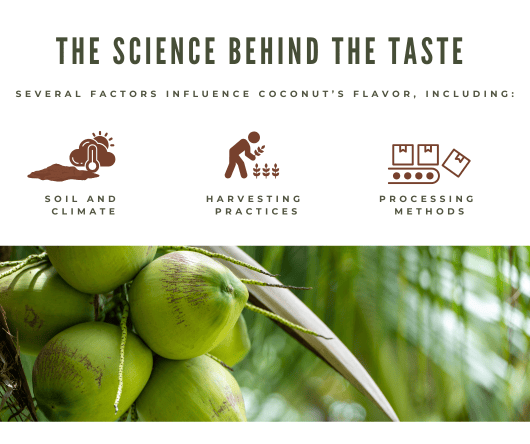
Have you ever found yourself asking why coconuts taste different depending on where they grow? Well, several factors influence their flavor, including:
- Soil and climate
- The type of soil and climate affects the sweetness, aroma, and texture of coconuts.
- For example, volcanic soil enriches the mineral content.
- In turn, this gives coconuts a robust flavor.
- Harvesting practices
- Timing affects both the sweetness of the water and the meat’s texture.
- Younger coconuts contain sweeter water.
- Mature coconuts yield richer meat.
- Processing methods
- Cold-pressing preserves more of the natural coconut aroma than high-heat processing methods.
Fun coconut trivia from around the world

- Coconuts are one of the most-traveled fruits, capable of floating across oceans and sprouting on new shores.
- In Jamaica, coconut “drops” (a candy made from coconut and ginger) are a traditional treat.
- Sri Lanka’s coconut sambol, a spicy relish made with grated coconut, is a staple in local cuisine.
Conclusion: Coconuts around the world

From sweet coconut water to savory snacks, coconuts offer a world of flavor waiting to be discovered. Each region’s take on this tropical fruit reflects its unique culture and environment.
Next time you enjoy a coconut product, take a moment to appreciate the journey it’s taken to reach you. With so many flavors and products to explore, the global coconut taste test is truly an adventure for the senses.
Click here to learn more about our wide selection of organic coconut products and ingredients. You may also send us an email for more information.
References and resources

- Drewnowski, Adam, et al. (2019) – Sugars and sweeteners: science, innovations, and consumer guidance for Asia.
- Food Network Kitchen (2023) – What Is Dulce de Leche? | Cooking School.
- Mooijer-Volendam (2024) – Coconut milk in world cuisine: from origin to current trends.
- Roshani Wickramasinghe (2020) – Sri Lankan Coconut Sambol.
- Tasty (2023) – Buko Pie (Filipino Young Coconut Pie) Recipe.


