

What are the top 5 challenges in maintaining coconut farming standards?

In the dynamic landscape of agriculture, adherence to standards is pivotal to ensuring reliability, quality, and safety in products and services. The coconut farming sector is no exception, where standards play a crucial role in meeting consumer demands for sustainability. However, amidst the pursuit of excellence, coconut farmers encounter several challenges that warrant attention and resolution.
In this article, The Coconut Cooperative explores the top five challenges faced by coconut farmers in maintaining farming standards, ranging from pest management to compliance with certifications.
1. Pest and disease management
Coconut trees, like any other crop, are susceptible to diseases and pests that can jeopardize the fruit and the health of the trees. Balancing the need to control these threats while preserving the natural integrity of the coconuts poses a significant challenge for farmers.
Striking the right balance without resorting to excessive pesticide use remains an ongoing struggle in the industry.
2. Soil health
The land where coconut trees are planted is also crucial to achieving a good crop. While soil typically is not a limiting factor, ensuring its health is vital for sustained tree growth and fruitful harvests.
Farmers must conduct thorough soil assessments before planting to optimize conditions for coconut tree growth and fruit quality.
3. Water
Water plays a critical role in coconut cultivation, yet consistent water supply poses challenges, particularly in regions with irregular rainfall patterns or limited access to water.
Effective water management strategies are essential for ensuring optimal growth and productivity of coconut trees, necessitating innovative solutions in water-scarce environments.
4. Climate change adaptation
The imminent threat posed by climate change requires coconut farmers to adjust their farming methods to lessen its effects. They need to foresee and react to changing weather conditions, adopting updated methods, and increasing their awareness to protect their crops and livelihoods.
Being adaptable and resilient is crucial when facing unpredictable changes in the environment, especially where coconut farming is involved.
5. Certification and compliance
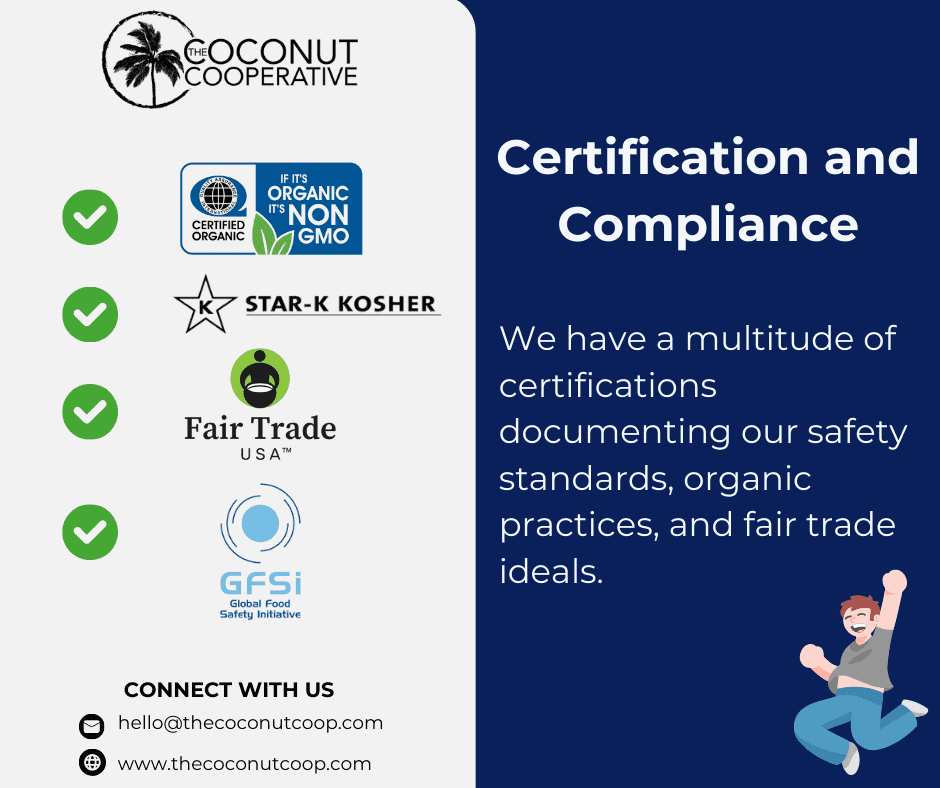
USDA Organic, Star K Kosher, QAI, and other certifications emphasize our commitment to delivering high-quality, reliable coconut products.
Navigating the complex landscape of certification requirements remains a challenge for many coconut farmers, but it is essential for fostering consumer confidence and market credibility.
Conclusion: Gearing toward a sustainable future in coconut farming

Despite facing continuous challenges, coconut farmers persevere in upholding coconut farming standards and sustainability practices. From pest management to certification compliance, each obstacle presents an opportunity for innovation and improvement within the coconut industry.
By addressing these challenges head-on, coconut farmers can ensure the continued supply of high-quality coconuts while meeting evolving consumer expectations in an ever-changing agricultural landscape.
Click here to learn more about us. If you have any questions about our products, please do not hesitate to send us a message.
References and resources

- Environmental Protection Agency (EPA) (2024) – U.S. Environmental Protection Agency.
- Food and Agriculture Organization of the United Nations (2024) – FAO.
- International Coconut Community (ICC) (2024) – A UNESCAP intergovernmental organization.
- Quality Assurance International (2024) – QAI.
- Star-K Kosher Certification (2024) – Get Kosher Certified.
- Sustainable Agriculture Research & Education (SARE) (2024) – Farmer-driven innovations in agriculture that improve profitability, stewardship and quality of life.
- United States Department of Agriculture (2024) – USDA.


