
What’s behind today’s coconut prices and trends?
 The global coconut industry is moving through one of its most interesting phases in years. After months of volatility, shifting tariff policies, and fluctuating raw-nut availability, the market has finally begun to show signs of steadying. Whether you work with coconut ingredients daily or simply enjoy staying informed, understanding why prices rise, fall, or hold firm can help you see the bigger picture of what’s happening behind your favorite products.
In this article, The Coconut Cooperative will walk you through the key factors shaping the coconut landscape, from desiccated coconut and powders to oils and sugar, in a clear, accessible way.
The global coconut market is stabilizing, but prices remain elevated

This year brought a whirlwind of changes for the coconut sector. From the U.S. tariffs introduced in mid-2025 to tighter supply earlier in the year, prices saw more dramatic swings than usual across Sri Lanka, Indonesia, and Vietnam. Today, the good news is that raw-nut availability has improved, allowing pricing to settle.
But “stable” does not necessarily mean “lower.”
Prices remain higher than early 2025 levels because the industry is still feeling the effects of tariff-induced cost increases and strong demand around the world — particularly in organic and plant-based sectors.
Desiccated coconut prices ease slightly but stay firm
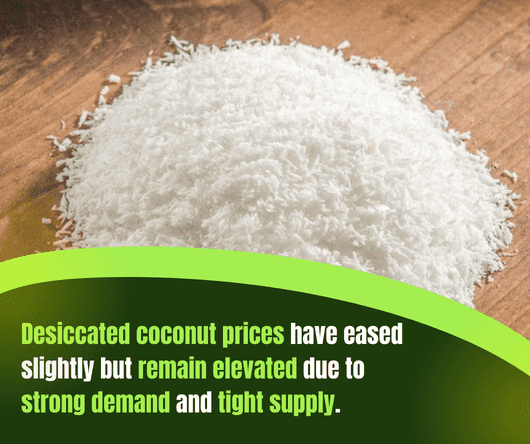
One of the most widely used coconut ingredients, desiccated coconut, experienced modest relief this month. Prices eased 2–5% month-over-month, nudging the category closer to pre-tariff levels. Still, demand remains strong, and supply remains tight enough to keep costs elevated compared to earlier in the year.
Here’s what’s shaping this category:
- Kernel yields in Sri Lanka have recovered, slightly easing pressure on medium and fine cuts.
- U.S. supply has expanded, helping stabilize toasted and untoasted chips.
- Year-to-date pricing is still roughly 10–15% higher, reflecting the wider macroeconomic climate.
Overall, desiccated coconut is expected to remain stable but elevated through the next three to four months.
Coconut powders continue their upward trend
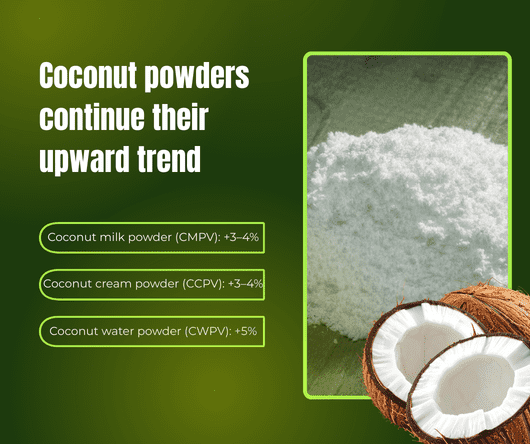
If there’s one category that shows no sign of slowing down, it’s coconut powders — particularly milk powder, cream powder, and water powder. Since 2022–2023, these ingredients have become increasingly popular in food, beverage, and plant-based categories in the U.S.
This month’s trends include:
- Coconut milk powder (CMPV): +3–4%
- Coconut cream powder (CCPV): +3–4%
- Coconut water powder (CWPV): +5%, driven by buyers shifting from liquid options to shelf-stable formats
The rising demand suggests that powders are becoming a long-term staple in manufacturing, thanks to their versatility, long shelf life, and logistical efficiency.
Coconut oil markets diverge: RBD up, VCO down
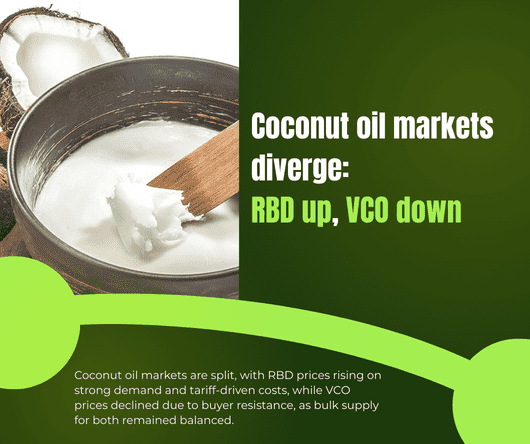
Coconut oil behaved differently depending on the type.
RBD coconut oil (Refined)
RBD oil in pails increased by 5%+, influenced by robust demand and limited improved-cost stock in the U.S. Even with logistics easing, tariff pass-through costs keep the baseline higher than in previous years.
Virgin coconut oil (VCO)
This month, VCO in pails declined by 8.9%. Smaller retail and food-service buyers showed resistance to the higher costs experienced in Q3, creating downward pressure.
Bulk totes for both oil types remained steady with balanced supply and demand.
Coconut sugar continues its rare stability
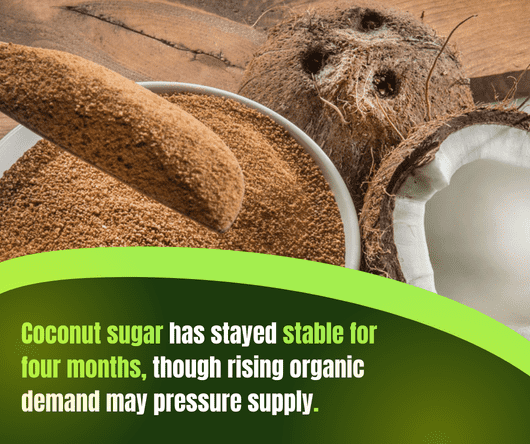
Amidst all the fluctuations, coconut sugar stands out as the most stable ingredient in the market. It has remained flat for four consecutive months, offering predictable input costs for manufacturers and distributors.
However, demand for organic coconut sugar continues to increase, and sourcing remains delicate due to limited production areas — primarily in Indonesia. While stable today, buyers may see shifts in the months ahead as supply chains tighten.
Global coconut market: What to expect through early 2026
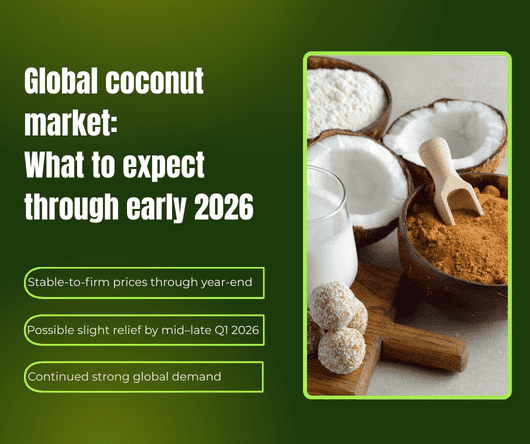
The sharp spikes of early 2025 are now behind us, but the coconut industry isn’t expected to return to pre-tariff pricing soon. The market outlook suggests:
- Stable-to-firm prices through year-end
- Possible slight relief by mid–late Q1 2026, depending on policy shifts and supply availability
- Continued strong global demand, especially for organic and plant-based applications
With the U.S. Supreme Court reviewing the 2025 tariff policy, the industry is watching closely. For now, steady pricing is the safest expectation.
Conclusion: Navigate the coconut market with confidence

The global coconut market reflects a sector that is adapting, evolving, and steadily regaining its footing after a turbulent year. From powders to oils to sugar, each category tells a slightly different story — but all share the same themes of strong demand and lingering cost pressures.
Whether you’re a food enthusiast, a small business owner, or simply curious about what shapes the coconut products on your shelf, understanding these trends gives you a clearer view of the global forces at play.
References and resources

- Business Research Insights (2025) – Coconut Sugar Market Size, Share, Growth, and Industry Analysis, By Type (Food Handling Equipment, Refrigeration Equipment, Food Preparation Equipment, Other), By Application (Restaurants, Hotels, Others), and Regional Forecast to 2035.
- Future Market Insights (2025) – Coconut Milk Powder Market | Global Market Analysis Report – 2035.
- International Coconut Community (2025) – A Bullish Coconut Oil Market in the Second Half of 2025.
- Persistence Market Research (2025) – Coconut Milk Powder Market Demand & Share to 2032.
- Spherical Insights (2025) – Coconut Milk and Cream Powder Market Size, Forecasts To 2033.


